
Ubuntu packages
Ubuntu comes with darktable packages. You can install them with
If you need a newer version than what is included in your distribution, check out the third party packages section.
Fedora packages
With bpkg: $ bpkg install rauchg/wifi-password With Homebrew: $ brew install wifi-password With Antigen: Add antigen bundle rauchg/wifi-password to your.zshrc with your other antigen commands. Add zgen load rauchg/wifi-password to your.zshrc with your other zgen commands.
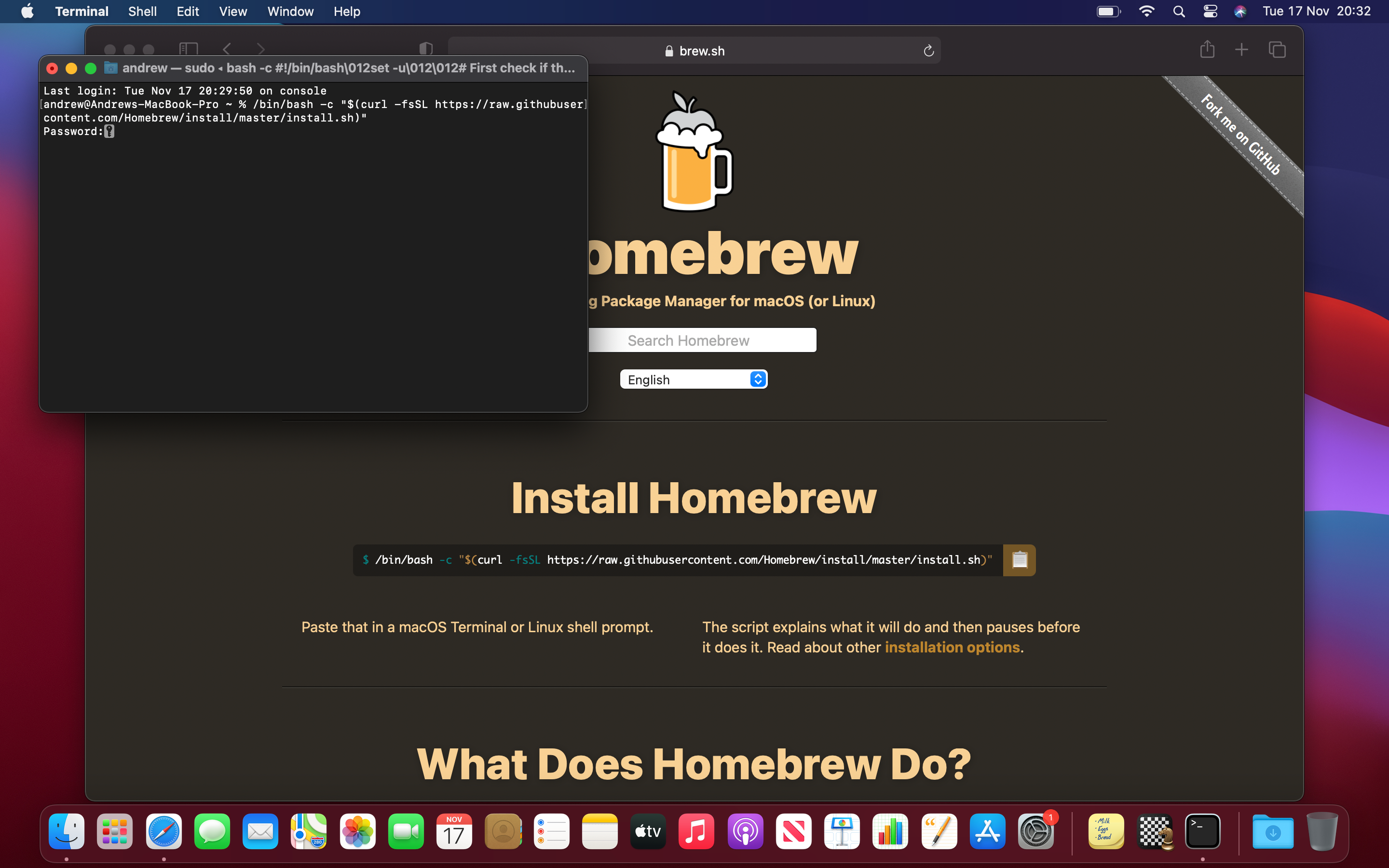
- For Mac OSX: There is a way to install Visual Studio Code through Brew-Cask. First, install 'Homebrew' from here. Now run following command and it will install latest Visual Studio Code on your Mac. $ brew cask install visual-studio-code. Above command should install Visual Studio Code and also set up the command-line calling of Visual Studio.
- # Homebrew brew install gpatch brew install opam # MacPort port install opam. See also howto setup Emacs.app for Opam usage. Versions 18.04 and newer. There is a ppa available that contains the current stable version of opam. Add-apt-repository ppa:avsm/ppa apt update apt install opam Versions older than 18.04. Use the binary distribution.
Fedora ships with darktable. A simple command should be enough.
Osx Homebrew Install Postgresql
If you need a newer version than what is included in your distribution, check out the third party packages section.
openSUSE packages
openSUSE ships with darktable. A simple zypper install darktable should be enough.
If you need a newer version than what is included in your distribution, check out the third party packages section.
Arch Linux
- thx to chressie for this, arch is non-ancient :)
Funtoo/Gentoo Linux
darktable is in portage!
RHEL / Scientific Linux / Centos
Osx Homebrew Installer
Debian
(Of course) there is a darktable package in the Debian repositories.
darktable can be installed by running
If you need a newer version than what is included in your distribution, check out the third party packages section.
Solaris
The darktable Solaris packages are provided and maintained by James. You can find his website here with all the packages provided: https://www.jmcpdotcom.com/blog/category/darktable/.
He has both the darktable packages and a dependency package in case this is the first time you are installing darktable on your system.
FreeBSD
darktable is available in the FreeBSD Ports Collection. It can be installed, pre-compiled, from the standard package repository.
To install darktable on your system, run
Microsoft Windows
- Read the Windows version specific section in the FAQ first.
- Download the latest Windows installer for darktable.
- Run it and install darktable.
macOS
- Download the latest DMG disk image for darktable
- Mount the thing
- Pull the darktable icon into applications folder
- Good luck :)
This bundle supports macOS versions starting with 10.7 (Lion) running on 64 bit Intel architecture.
What to do with dialog saying “darktable” can’t be opened because it was not downloaded from the Mac App Store:
- Locate darktable in Applications folder (or wherever you installed it) using Finder
- Do “Open” via context menu
- You will be presented with similar-looking dialog, but this time there will be second button allowing you to run the application
- After that you will be able to start darktable without this trick (well, until you update it, then you will have to do above steps again)
or you can prevent this from happening by running xattr -d com.apple.quarantine ~/Downloads/darktable*.dmg command before mounting the image (or xattr -dr com.apple.quarantine /Applications/darktable.app after installing).
macOS MacPorts
darktable can be installed through MacPorts:
macOS Homebrew
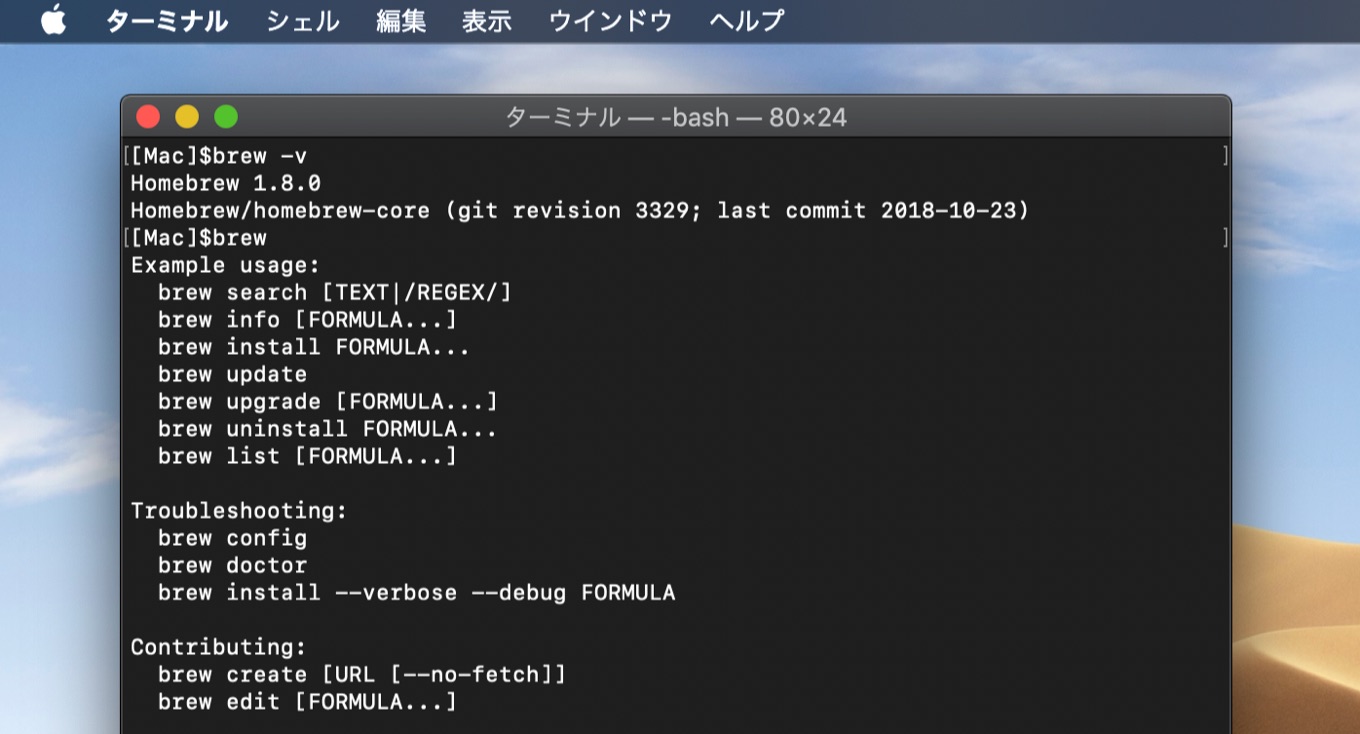
darktable can be installed through Homebrew:
OBS
The OBS allows packagers to provide packages for multiple distributions.
Right now the darktable packages listed below are built for the following Linux distributions:
Right now this means for the stable package:
- Debian 9, 10, Next aka Testing
- Fedora 29, 30, 31, Rawhide
- openSUSE 15.0, 15.1, Tumbleweed
- Ubuntu 18.04, 19.04, 19.10, 20.04 (only latest release, not snapshot from stable release branch)
For master we build for the following distributions because of missing required packages in older distributions:
- Debian 9, 10, Next aka Testing
- Fedora 29, 30, 31, Rawhide
- openSUSE 15.0, 15.1, Tumbleweed
- Ubuntu 18.04, 19.04, 19.10, 20.04
The available packages are:
Backports for Debian
A description on how to enable the backports repository can be found here: https://backports.debian.org/Instructions/
Prerequisites
- *nix (tested: Debian, Ubuntu, Arch Linux, Funtoo, Gentoo, Fedora, Macintosh OS X with Macports)
- We strongly recommend using a 64bit operating system!
- Required packages:
libsqlite3, libjpeg, libpng, libpugixml, rawspeed (supplied), gtk+-3, cairo, lcms2, exiv2, tiff, curl, gphoto2, dbus-glib, fop, openexr, libsoup2.4 - Required: gcc >= 5.0
- Grab the latest source tarball (recent version: darktable 3.4.1) – make sure to use the .tar.xz file and not the auto generated .zip or .tar.gz!
- Install the dependencies. For details see the link below.
Unpack:
Then either do
or, manually:
In order to get darktable displayed along with your other applications you need to set a symlink:
For a more complete set of instructions for different distributions have a look at our Wiki.
First a word of warning: Using the development version of darktable might be risky in that it can break anytime, kill your edits, eat your kittens or do other nasty things. It is also not guaranteed that XMP sidecars written by a development version will work with a release version. It is also quite certain that any older version of darktable will NOT be able to read the database once a development build updated it to the latest schema. So for your own safety and our sanity, do make backups of your XMP files as well as your library.db and data.db (by default it is in ~/.config/darktable/) BEFORE upgrading to the self compiled git version. That being said, it should be quite safe to actually use it and never go back, so all of this might be no issue for you at all. Just keep in mind that IF you ever want to go back it might be hard.
Be sure to have all the build dependencies installed. You can find a list of them here. If you don’t have it already, install git from your distribution’s repositories. For Ubuntu:
Cloning for the first time
The cloned files from the git repository are now stored in $HOME/darktable.
Getting rawspeed submodule
Building with build.sh
The files get prepared to be installed in /opt. If you want to install at another place, you have to type:
After the build process finished you can install darktable:
Updating existing git-files
Building manually
make and install
Starting the program
Let’s rock!
What is macFUSE?
macFUSE allows you to extend macOS's native file handling capabilities via third-party file systems.
Features
As a user, installing the macFUSE software package will let you use any third-party FUSE file system. Legacy MacFUSE file systems are supported through the optional MacFUSE compatibility layer.
As a developer, you can use the FUSE SDK to write numerous types of new file systems as regular user space programs. The content of these file systems can come from anywhere: from the local disk, from across the network, from memory, or any other combination of sources. Writing a file system using FUSE is orders of magnitude easier and quicker than the traditional approach of writing in-kernel file systems. Since FUSE file systems are regular applications (as opposed to kernel extensions), you have just as much flexibility and choice in programming tools, debuggers, and libraries as you have if you were developing standard macOS applications.
How It Works
In more technical terms, FUSE implements a mechanism that makes it possible to implement a fully functional file system in a user-space program on macOS. It provides multiple APIs, one of which is a superset of the FUSE API (file system in user space) that originated on Linux. Therefore, many existing FUSE file systems become readily usable on macOS.
The macFUSE software consists of a kernel extension and various user space libraries and tools. It comes with C-based and Objective-C-based SDKs. If you prefer another language (say, Python or Java), you should be able to create file systems in those languages after you install the relevant language bindings yourself.
The filesystems repository contains source code for several exciting and useful file systems for you to browse, compile, and build upon, such as sshfs, procfs, AccessibilityFS, GrabFS, LoopbackFS, SpotlightFS, and YouTubeFS.